
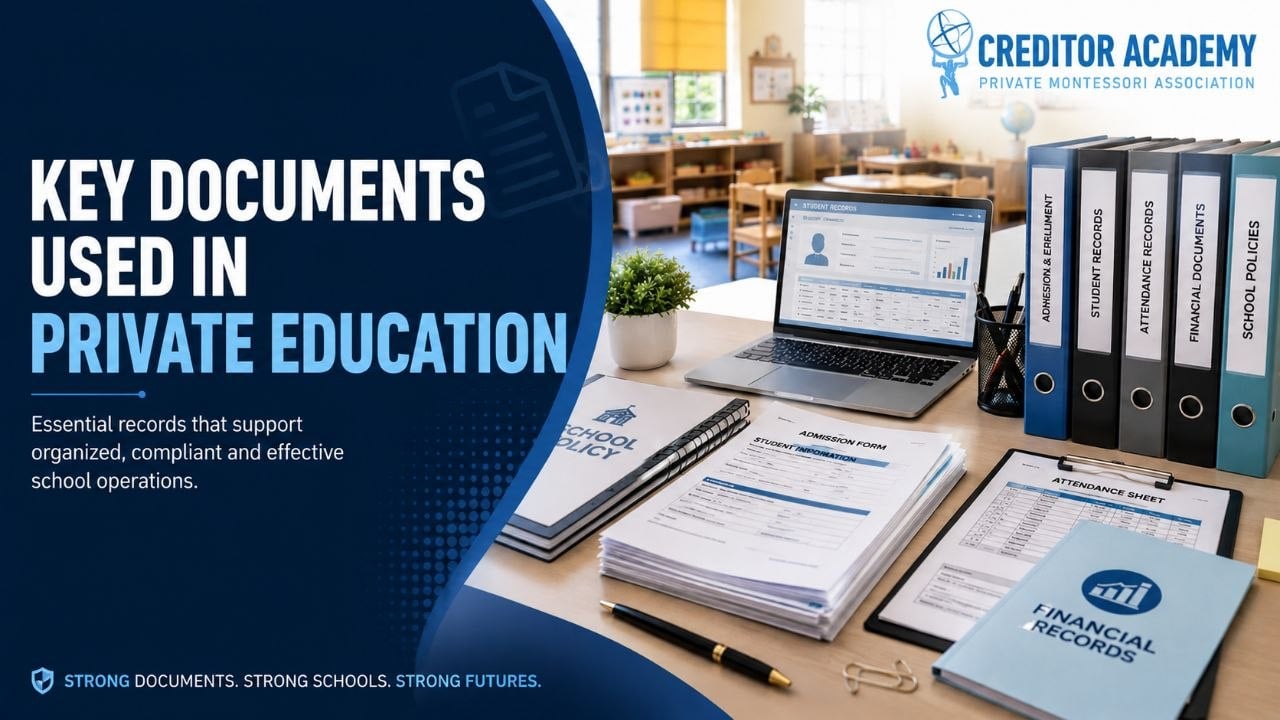
Private education can involve a variety of documents designed to organize business operations, establish relationships, maintain records, and communicate expectations. Understanding what these documents are and why they may be used can help business owners and entrepreneurs make more informed decisions.
Whether you are learning about private business operations, business structures, asset protection, or financial education, having a clear understanding of important documents is an essential part of becoming more organized and informed.
In this guide, we will explore the key documents used in private education, what they generally do, and why proper documentation matters.
What Is Private Education?
Private education refers to educational programs, training, and learning environments that operate outside traditional public education systems.
In the context of private business and financial education, private education may focus on subjects such as:
- Business organization
- Financial education
- Business credit
- Asset protection
- Private business operations
- Business structures
- Recordkeeping
- Contracts and agreements
- Financial planning
The specific documents used will depend on the organization, educational program, business structure, and purpose of the activity.
Why Are Documents Important in Private Education?
Documentation helps create clarity.
For entrepreneurs and business owners, written documents can help establish expectations, record decisions, explain relationships, and organize business activities.
Proper documentation may help with:
- Establishing clear agreements
- Maintaining business records
- Defining responsibilities
- Organizing transactions
- Documenting educational activities
- Communicating policies
- Supporting consistent business procedures
Good documentation does not replace professional legal or financial advice. Instead, it provides an organized foundation for managing information and business relationships.
Key Documents Used in Private Education
1. Educational Agreements
An educational agreement can describe the relationship between an educational provider and a participant.
Depending on the program, it may include information such as program description, educational objectives, participant responsibilities, provider responsibilities, fees and payment terms, cancellation policies, and program expectations.
Before signing any agreement, participants should read the terms carefully and make sure they understand what they are agreeing to.
2. Enrollment Forms
Enrollment forms are commonly used to collect information from individuals participating in an educational program.
An enrollment form may contain participant information, contact information, program selection, enrollment date, payment information, program acknowledgments, and signature or electronic acceptance.
Keeping enrollment records organized can make administration easier and help maintain accurate participant information.
3. Terms and Conditions
Terms and conditions establish the rules and expectations associated with a program, service, website, membership, or educational offering.
They may explain acceptable use, payment requirements, cancellation procedures, membership rules, intellectual property, participant responsibilities, limitations of liability, and dispute procedures.
Terms and conditions should be written clearly and reviewed periodically as the organization changes.
4. Privacy Policies
A privacy policy explains how an organization collects, uses, stores, and protects personal information.
For organizations operating websites, membership programs, or online educational platforms, privacy documentation can be especially important.
A privacy policy may address information collected, how information is used, data sharing, cookies and tracking technologies, communication preferences, data security, and user rights.
Privacy requirements can vary depending on the jurisdiction and the type of information collected.
5. Membership Agreements
Private educational organizations may use membership agreements when participants become members of a program or organization.
A membership agreement can explain membership benefits, membership fees, member responsibilities, program access, renewal terms, cancellation procedures, and rules of participation.
Clear membership documentation can help both the organization and the member understand the relationship.
6. Policies and Procedures
Policies and procedures provide a framework for how an organization operates.
Examples may include enrollment procedures, payment procedures, recordkeeping procedures, communication policies, member conduct policies, educational policies, and data protection procedures.
Having written procedures can help create consistency and reduce confusion.
7. Contracts and Service Agreements
Contracts may be used when an organization works with instructors, consultants, vendors, service providers, or other businesses.
A contract may establish scope of work, responsibilities, payment terms, deadlines, confidentiality, intellectual property rights, and termination provisions.
Contracts should be appropriate for the specific relationship and reviewed by a qualified professional when necessary.
8. Business Formation Documents
Private education may also involve documents related to the underlying business or organization.
Depending on the structure, these may include formation documents, operating agreements, bylaws, ownership records, resolutions, business licenses, and tax registrations.
These documents can help establish how an organization is structured and governed. Business owners should understand that different business structures have different legal and tax requirements.
9. Financial Records
Financial documentation is another important part of organized business operations.
Examples include invoices, receipts, bank statements, expense records, payment records, financial statements, budget documents, and accounting records.
Maintaining accurate financial records can help business owners understand cash flow and make better financial decisions.
10. Educational Materials and Course Documents
Educational programs may also maintain documents related directly to instruction.
These may include course outlines, lesson plans, workbooks, training materials, presentations, assignments, certificates, and educational resources.
These documents help organize the learning experience and provide participants with structured educational content.
Key Documents and Private Business Operations
Documentation becomes particularly important when an entrepreneur is developing a private business operation.
Business owners may need to organize information related to business structure, contracts, business banking, business credit, financial records, vendor relationships, customer relationships, and business assets.
Understanding the difference between educational information and legal requirements is important. For example, learning about business credit does not automatically establish business credit. Likewise, learning about an organizational structure does not mean that a particular structure is appropriate for every business.
Ready to Take the Next Step?
Key Documents and Business Credit
Business owners who are learning about financial management should understand the role of documentation in building an organized business credit profile.
Business-related documents may include business registration information, business identification information, vendor agreements, invoices, payment records, bank records, credit applications, and business financial statements.
Accurate and consistent information can help reduce administrative confusion when working with financial institutions, vendors, and other businesses.
Key Documents and Asset Protection
Asset protection is another area where documentation can matter.
Business owners may maintain records related to ownership, business assets, contracts, insurance, business entities, trust arrangements, and financial transactions.
The appropriate documentation depends on the individual's circumstances and applicable laws. Entrepreneurs interested in learning more about asset protection should seek qualified legal advice before implementing a particular strategy.
Key Documents and Financial Education
Financial education is not only about earning money. It also involves understanding how money, business records, contracts, credit, and financial decisions work together.
Learning how to organize and understand important documents can help entrepreneurs become more financially informed.
Some important areas to study include budgeting, cash flow, business credit, business funding, financial planning, asset protection, business structures, and recordkeeping.
How to Organize Your Private Education Documents
Having documents is only the first step. Keeping them organized is equally important.
1. Create Separate Categories — Organize documents into categories such as: Business (formation documents, licenses, contracts, policies), Financial (bank statements, invoices, receipts, accounting records), Education (course materials, enrollment records, certificates), and Legal (agreements, notices, professional documents).
2. Keep Digital Copies — Maintain secure digital copies of important records when appropriate. Use organized folders and consistent file names so documents can be located quickly.
3. Protect Sensitive Information — Documents may contain personal, financial, or business information. Use appropriate security measures, limit access, and avoid sharing sensitive information unnecessarily.
4. Review Documents Regularly — Business circumstances can change. Review important policies, agreements, and records periodically to determine whether updates are needed.
5. Work With Qualified Professionals — Certain documents have legal, tax, accounting, or regulatory implications. When a document could affect your legal rights, taxes, ownership, or financial obligations, consider consulting an appropriately qualified professional.
Common Mistakes With Business and Educational Documents
Using Templates Without Understanding Them — A template may not be appropriate for every situation. Always understand what a document says before signing or using it.
Mixing Personal and Business Records — Keeping personal and business finances and records separate can make organization and accounting easier.
Failing to Keep Records — Missing documentation can make it difficult to verify transactions, agreements, or business decisions.
Using Outdated Documents — Policies, agreements, and business information should be reviewed when circumstances change.
Assuming a Document Creates Legal Rights by Itself — A document's effect depends on applicable law, the facts surrounding it, and how it is created and used.
A Simple Private Education Document Checklist
Educational Documents - Course information - Enrollment forms - Educational agreements - Course materials - Certificates or completion records
Business Documents - Formation records - Operating documents - Contracts - Policies and procedures
Financial Documents - Invoices - Receipts - Bank records - Budgets - Financial statements
Administrative Documents - Contact records - Membership records - Privacy policy - Terms and conditions
Professional Documents - Legal agreements - Accounting records - Tax documents - Professional advice and supporting records
Ready to Take the Next Step?
Conclusion
Understanding the key documents used in private education can help entrepreneurs and business owners become more organized and informed.
From enrollment forms and educational agreements to contracts, financial records, policies, and business documents, each document can serve a different purpose.
The most important step is to understand what a document actually does, maintain accurate records, and seek qualified professional guidance when legal, tax, or financial issues are involved.
Education can help you ask better questions, understand your options, and make more informed decisions about your business and financial future.
To know more, visit our website Creditor Academy.
Frequently Asked Questions
What are the key documents used in private education?
Common documents can include enrollment forms, educational agreements, terms and conditions, privacy policies, membership agreements, policies, contracts, financial records, and educational materials.
Are private education documents legally required?
Not every document is legally required in every situation. Requirements depend on the organization, location, business structure, activity, and applicable laws.
Why are educational agreements important?
Educational agreements can explain program expectations, responsibilities, fees, and other terms between the provider and participant.
Should I use online templates for business documents?
Templates can provide a starting point, but they may not address the specific facts or legal requirements of your situation. Professional review may be appropriate for important legal or financial documents.
How should business documents be stored?
Important documents should be organized and securely stored. Digital backups can be useful, particularly for records that are difficult to replace.
What documents should entrepreneurs understand?
Entrepreneurs should become familiar with documents related to their business structure, contracts, finances, credit, taxes, assets, and operations.
Learn More With Creditor Academy
Understanding important documents is one part of becoming more informed about private business operations and financial education.
At Creditor Academy, entrepreneurs can explore educational resources covering business credit, asset protection, private business operations, financial education, and financial freedom.
- Become Private — Learn about private business concepts, organization, privacy, ownership, and financial education.
- Operate Private — Explore business operations, organization, financial management, and related concepts.
- Financial Freedom — Develop broader knowledge around business credit, funding, asset management, and long-term financial planning.
Continue Your Financial Education
Building financial knowledge takes time. Start by learning the fundamentals: understand your business structure, organize your business records, learn how business credit works, understand financial planning, study asset protection concepts, learn about business funding, keep accurate financial records, understand the documents you sign, and seek professional advice when necessary.
The goal of private education should be informed decision-making — not simply collecting documents.
Join the Creditor Academy Free Webinar to expand your knowledge of business organization, financial education, business credit, and long-term financial planning.
This article is provided for general educational and informational purposes only. It is not legal, tax, accounting, financial, or investment advice. Laws and requirements vary by jurisdiction and individual circumstances. Nothing in this article creates an attorney-client, accountant-client, or financial-advisor relationship. Consult an appropriately qualified professional for advice regarding your specific situation.