
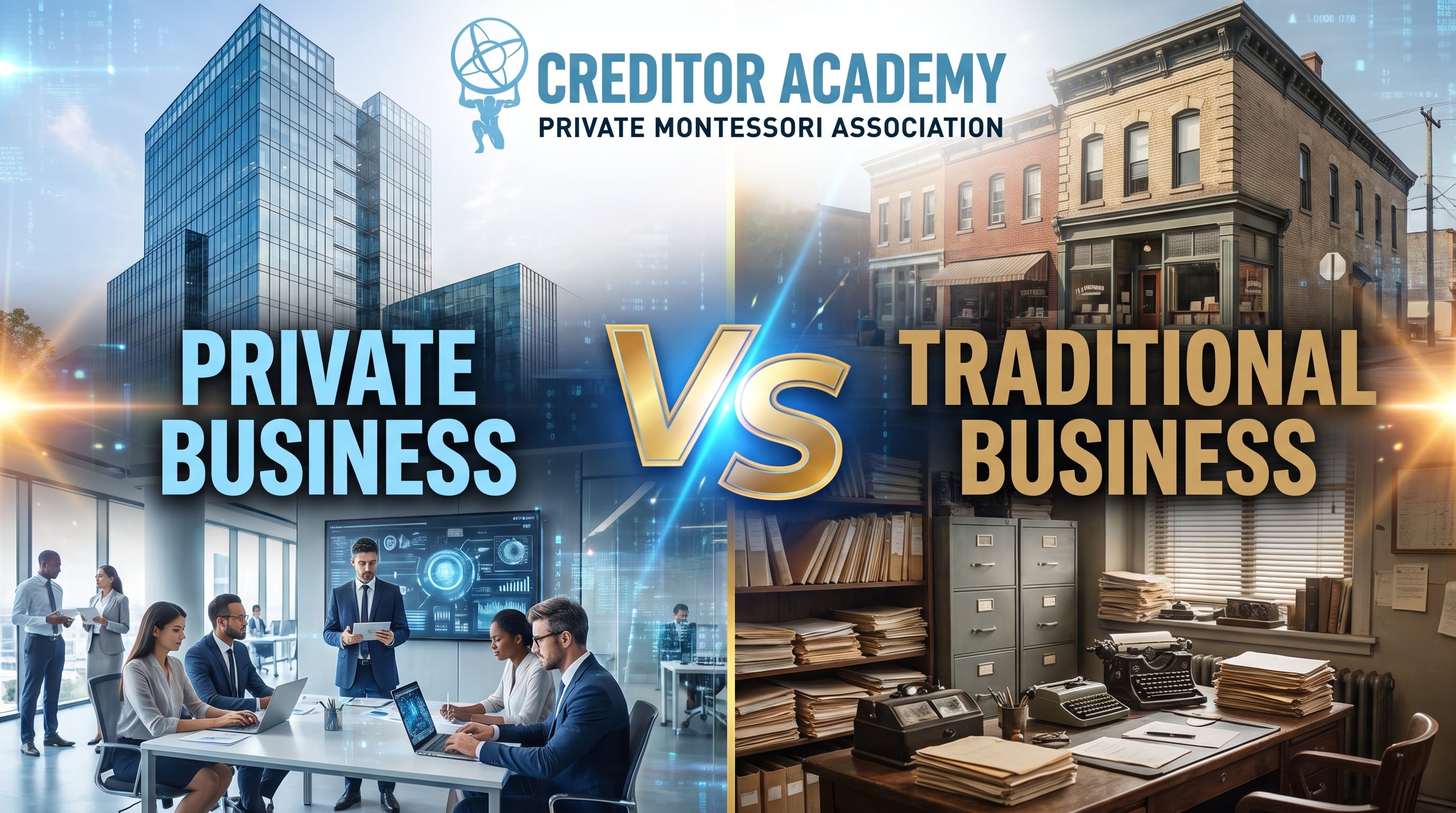
Choosing the right approach to running a business is one of the most important decisions an entrepreneur can make. Business owners often encounter terms such as private business, traditional business, sole proprietorship, partnership, LLC, and corporation. Understanding what these terms mean can help entrepreneurs make informed decisions that align with their goals.
In general, a private business refers to a company that is privately owned and not publicly traded on a stock exchange. A traditional business can refer more broadly to conventional business models and structures commonly used by entrepreneurs.
Rather than viewing one approach as universally better than another, it's important to understand the characteristics, advantages, and considerations of each. In this article, we'll compare private businesses and traditional business models to help you better understand how different approaches support different business objectives.
What Is a Private Business?
A private business is a company owned by individuals, families, or a limited group of investors. Its ownership interests are not offered to the general public through a public stock exchange.
Private businesses vary in size, from small family-owned companies to large privately held organizations.
Examples include:
- Family-owned businesses
- Closely held corporations
- Limited liability companies (LLCs)
- Partnerships
- Privately held corporations
Ownership structures vary by jurisdiction and should be selected with guidance from qualified legal and financial professionals.
What Is a Traditional Business?
The term traditional business generally refers to conventional business operations that follow established commercial practices and legal structures.
Traditional businesses may include:
- Sole proprietorships
- Partnerships
- Limited liability companies
- Corporations
- Franchises
Many traditional businesses are also privately owned. The term often emphasizes conventional business practices rather than a specific ownership model.
Private Business vs Traditional Business
| Private Business | Traditional Business |
|---|---|
| Owned by private individuals or a limited group | Refers broadly to conventional business operations |
| Ownership interests are not publicly traded | May use various legal structures |
| Decisions are typically made by owners or appointed managers | Governance depends on the chosen business structure |
| Growth strategies vary based on business goals | Can range from local businesses to larger enterprises |
| Financial management depends on ownership objectives | Financial practices vary by business type |
Key Differences
Ownership
Private businesses are owned by individuals or a defined group of owners rather than public shareholders.
Traditional businesses can also be privately owned but may refer more generally to common business structures and operational models.
Decision-Making
Many privately owned businesses can make strategic decisions without the reporting requirements associated with publicly traded companies.
Regardless of ownership, effective governance and sound management remain essential.
Funding
Businesses may seek financing through a variety of methods, including:
- Owner investment
- Bank loans
- Investors
- Venture capital
- Revenue reinvestment
Funding options depend on the business model, financial health, and lender or investor requirements.
Privacy
Businesses often seek to protect:
- Customer information
- Financial records
- Intellectual property
- Strategic plans
- Employee information
Strong privacy practices benefit organizations of every size.
Benefits of a Privately Owned Business
Many entrepreneurs choose privately owned businesses because they can offer:
Greater Flexibility
Owners may have greater flexibility in strategic planning, product development, and operational decisions.
Long-Term Focus
Private ownership may allow businesses to prioritize long-term objectives over short-term market expectations.
Confidentiality
Businesses can protect sensitive commercial information through appropriate governance and security practices.
Ready to Take the Next Step?
Strong Company Culture
Privately owned businesses often develop cultures that reflect the values and vision of their owners.
Considerations
Every business structure has advantages and challenges.
Entrepreneurs should evaluate:
- Business goals
- Industry requirements
- Ownership preferences
- Financing needs
- Tax considerations
- Risk management
Professional legal and financial advice is essential before choosing a business structure.
Common Misconceptions
Myth: Every private business operates the same way.
No. Ownership structures and operational practices vary significantly.
Myth: One structure is best for every entrepreneur.
The most appropriate structure depends on individual business objectives and circumstances.
Myth: Private ownership eliminates legal responsibilities.
All businesses must comply with applicable laws and regulations.
Practical Tips
Before choosing a business structure:
- Define your long-term goals.
- Understand available legal structures.
- Separate business and personal finances where appropriate.
- Maintain organized financial records.
- Consult qualified professionals.
- Continue learning about business management and financial planning.
Learn More with Creditor Academy
Successful entrepreneurship requires continuous learning.
Creditor Academy provides educational resources covering:
- Business organization
- Financial literacy
- Business planning
- Wealth-building concepts
- Long-term financial education
You can also join the Creditor Academy Free Webinar to explore these topics and continue developing your business knowledge.
Ready to Take the Next Step?
Conclusion
Choosing a business structure is an important decision that should align with your goals, resources, and long-term vision. Understanding the differences between privately owned businesses and traditional business models can help entrepreneurs make informed decisions while building a strong foundation for growth.
Investing in financial education, maintaining sound governance, and seeking professional guidance are key steps toward creating a resilient and successful business.
To know more, visit our website Creditor Academy.
Frequently Asked Questions
What is a private business?
A privately owned business is owned by individuals or a limited group of owners and is not publicly traded on a stock exchange.
Is a private business better than a traditional business?
Neither is universally better. The right choice depends on business goals, ownership preferences, financing needs, and legal considerations.
Can small businesses be privately owned?
Yes. Many small businesses are privately owned.
Do privately owned businesses have different legal responsibilities?
Businesses remain subject to applicable laws and regulations regardless of ownership structure.
Why is business organization important?
Strong organization supports better decision-making, financial management, and long-term planning.
This article is for educational purposes only and does not constitute legal, tax, financial, or investment advice. Always consult qualified professionals before making business or financial decisions.