
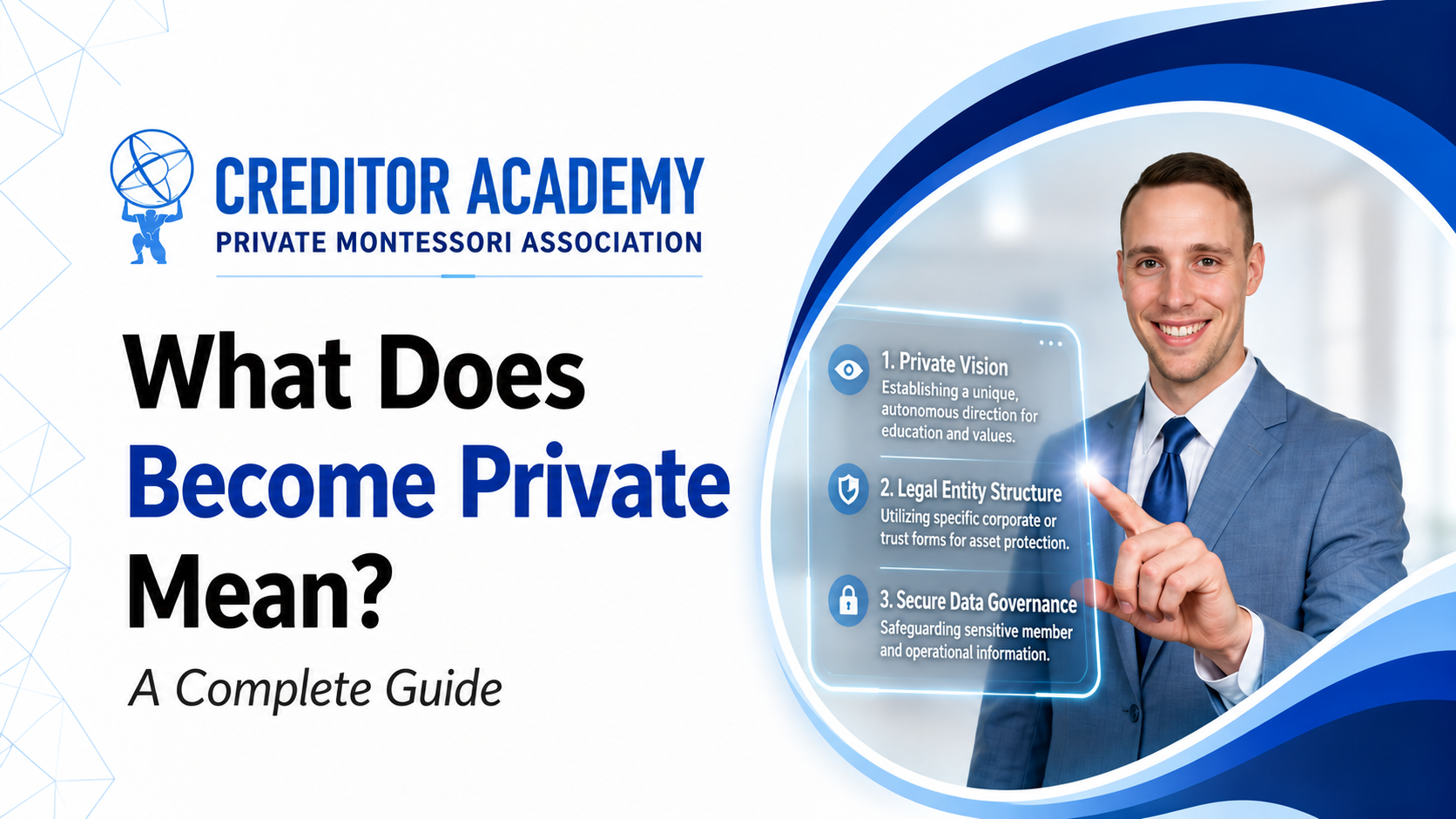
"Become private" is a phrase that shows up in several very different contexts: personal data and privacy, business structuring, asset protection, and credit and financial coaching. Depending on where you encountered it, it can mean something as ordinary as switching a social media account to private, or something far more contested, like claims that you can restructure your legal identity to sit outside consumer and lending law.
This guide walks through what "become private" actually means in each of these contexts, so you can tell which meaning applies to what you're reading and, where the term is used in ways that go beyond what the law actually supports, what's real and what isn't.
The Short Answer
At its core, "become private" describes a shift from being publicly accessible, publicly regulated, or publicly identifiable to operating in a more restricted, member-only, or less visible way. What changes and what doesn't depend entirely on the context:
- In privacy and social media, it means limiting who can see your content or data.
- In business structuring, it means forming an entity (like an LLC or private corporation) that isn't publicly traded and has more control over ownership and disclosure.
- In asset protection, it means using trusts or private entities to manage how assets are held and passed on.
- In credit and "financial freedom" coaching, it's used to claim that an individual can exit the reach of certain laws entirely, a claim not supported by how courts have actually ruled.
Let's go through each one.
1. "Become Private" in Data and Social Media
This is the most common everyday use. Making an account, profile, or document "private" restricts who can view it:
- Social media: Switching an Instagram, TikTok, or Facebook account from public to private limits visibility to approved followers only.
- Personal data: Laws like the California Consumer Privacy Act (CCPA) let residents request that companies limit the sale or sharing of their personal data, a legally enforceable form of "going private" with your information.
- Documents and files: Setting sharing permissions on cloud storage (Google Drive, Dropbox) so only specific people can access a file.
This usage is straightforward and doesn't involve any legal ambiguity; it's simply a visibility or access setting.
2. "Become Private" in Business Structuring
In the business world, "private" has a specific, well-established meaning: not publicly traded, and not required to meet the disclosure obligations of a public company.
- Private company vs. public company: A private company doesn't sell shares on a public stock exchange and isn't required to file the same disclosures with the SEC as a public one. "Going private" is an actual, well-documented process where a publicly traded company buys back its shares and delists from the stock market.
- LLCs and private corporations: Forming an LLC or corporation is a legitimate way to create a distinct legal entity, with real (though not unlimited) liability protection between your personal and business assets.
- Private Membership Associations (PMAs): A PMA is a legal structure that lets a group organize as a private, members-only association rather than a public-facing business. This is genuinely useful for private clubs, associations, or membership-based communities. What it does not do is exempt the association from laws that would otherwise apply to the activity it's conducting, a PMA offering financial services, for instance, still generally needs to meet the licensing requirements that apply to financial services, regardless of the "private" label.
This is the category where a lot of confusion happens, because the word "private" is accurate and the entity is real — the confusion comes in when people assume "private" status also means "unregulated," which isn't how these entities actually work.
3. "Become Private" in Asset Protection and Trusts
Trusts and private entities are genuine, long-established tools in estate planning and asset protection:
- Revocable and irrevocable trusts let you control how assets are managed and distributed, and when properly drafted by an attorney and funded correctly, irrevocable trusts can offer real, but narrow and jurisdiction-specific, protection from certain creditors.
- Private trust companies are a real, if fairly high-net-worth-oriented, structure that families sometimes use to manage trust administration privately rather than through a public bank trust department.
- Privacy of ownership: Holding assets through an LLC or trust can limit how easily your ownership is discoverable in public records, which is a legitimate privacy benefit distinct from any claim about legal exemption.
The key with all of these tools: they change how assets are held and who can see that they're held that way. They don't change whether the underlying laws (tax law, contract law, creditor law) apply to you.
4. "Become Private" in Credit and Financial Coaching
This is the newest and most contested use of the phrase, and it's worth covering carefully because it's often presented as if it were the same thing as the legitimate categories above.
In this space, "become private" typically refers to a bundle of claims:
- That declaring yourself a "private person" (sometimes framed as separating from a "public" legal identity or "strawman") changes your relationship to contracts, debts, or courts
- That filing certain documents (a UCC-1 financing statement is the most common) converts your legal status or discharges obligations
- That operating "in private" through a PMA lets you offer lending, banking-like, or credit-repair services without the licenses that would normally be required
What's accurate here: PMAs, trusts, and private LLCs are real entities, and people do use them as part of legitimate financial and privacy strategies.
What isn't supported: The claim that declaring "private" status changes your underlying legal obligations, or that a PMA can operate outside licensing law simply because it's structured as private, is not something courts have upheld. Judges have addressed these theories directly, in published rulings, and rejected them regardless of the specific documents or wording used. Regulators, including state banking authorities and the Consumer Financial Protection Bureau, have also taken enforcement action against entities offering unlicensed financial services under a "private" or "membership" label.
If you're encountering "become private" in the context of a credit-repair or debt-relief pitch specifically, it's worth treating the underlying financial claims (not the entity types themselves) with real scrutiny, and ideally getting a second opinion from a licensed attorney or nonprofit credit counselor before paying for a program or acting on its advice.
How to Tell Which Version You're Dealing With
A quick way to sort out which meaning applies:
| If the context mentions... | You're likely looking at... |
|---|---|
| Account settings, followers, data sharing | Privacy/visibility, no legal complexity |
| Stock exchange, shareholders, SEC filings | Business structuring well-established process |
| Estate planning, an attorney, and a named trust | Asset protection is legitimate, but narrow in scope |
| "Strawman," UCC filings, discharging debt, sovereign status | Financial coaching claims are treated with real scrutiny |
Conclusion
"Become private" isn't one concept it's a phrase borrowed across privacy settings, business law, estate planning, and financial coaching, and it means something different (and carries very different legal weight) in each. The entities involved, LLCs, trusts, and PMAs, are real and can be genuinely useful when set up correctly and for their actual legal purpose. Where the term gets stretched into claims about exemption from debt, taxes, or regulation, that's the part worth verifying independently, ideally with a licensed attorney or accountant before you rely on it.
Frequently Asked Questions
What does it mean to "become private" as a business?
It usually means either forming a private company (not publicly traded, not subject to SEC public-disclosure rules) or organizing as a private membership association for a members-only activity. Both are real legal structures with specific formation requirements.
Does becoming a private membership association (PMA) exempt you from regulation?
No. A PMA can legally restrict its activities to members, but it doesn't exempt the association from laws that apply to the activity itself — financial services, healthcare, and similar regulated fields generally still require the same licenses regardless of the "private" label.
Can filing a UCC-1 make me a "private" person exempt from debt?
No. A UCC-1 is a real legal filing used to give public notice of a security interest in property; it has a specific, narrow legal function. It doesn't change your legal status or discharge debts, and courts have consistently rejected claims that it does.
What's the difference between a private trust and "becoming private" for asset protection?
A properly drafted trust, set up by an attorney, is a legitimate way to manage how assets are held, who can see that ownership, and how they pass to beneficiaries. It changes visibility and structure — not whether tax law, contract law, or court jurisdiction applies to you.
This article is for general informational purposes and isn't legal or financial advice. For guidance specific to your situation, consult a licensed attorney or financial professional.